A good design is sum of great engineering choices resulting a satisfactory compromise.
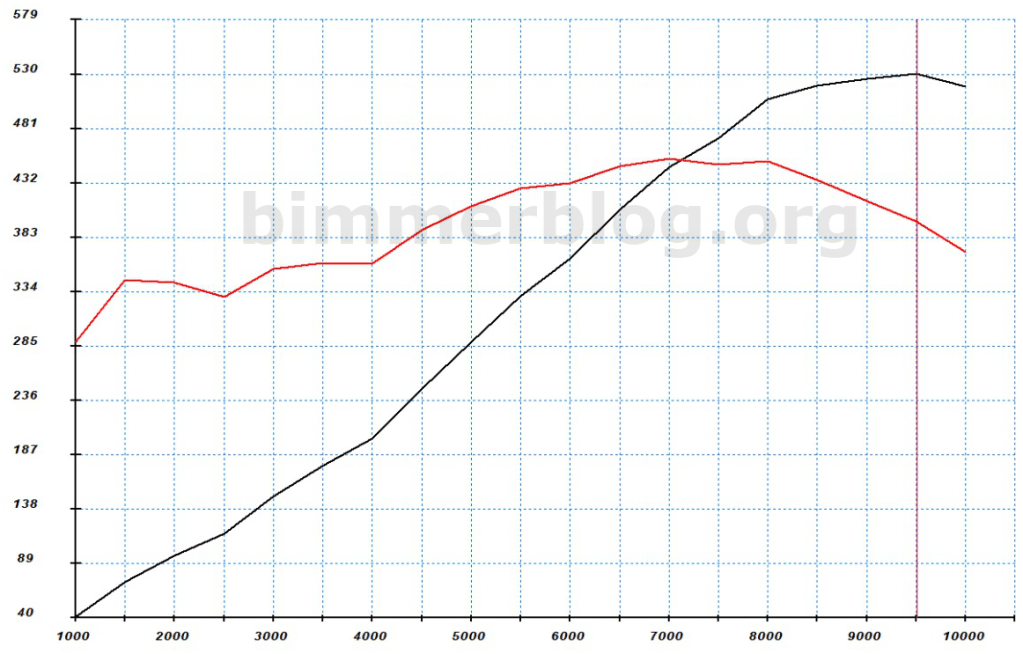
A text book like power curve on 120 hp per litre M60B44 frankenmotor.
The goal has been to design street drivable, 120hp per litre M60 engine with smooth power delivery, and reasonably good idle characteristics. Is it possible without Vanos? Please read on!
A) Bimmerblog.org designed, secret sauce camshafts,
These camshafts:
provide better idle and part throttle drivability than aftermarket cams,
are exceptionally good at reducing parasitic losses,
are suitable for up to 120hp per litre configuration,
No rollercoaster in power curve,
No risk of knocking in high compression engine.
B) Bimmerblog.org designed, individual throttle bodies (ITBs) with bellmouths:
Tapered intake runners,
55mm butterflies,
Effective runner length is 216mm,
Effective runner diameter is 53,4mm,
Relatively easy to DIY from aftermarket or OEM parts.
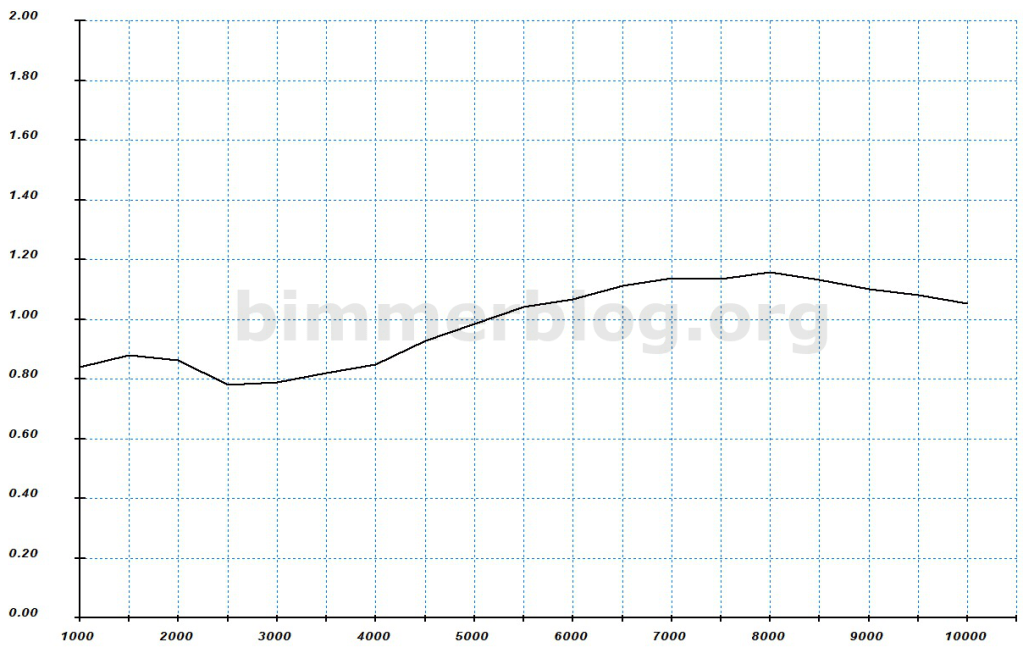
Delivery ratio peaks at 8000rpm with 216mm long runners and effective intake diameter of 53,4mm.
Other remarks:
The low end torque was not a design parameter: only the smoothness of power curve,
41mm header primaries can be deemed undersized by many,
Collectors are seen restrictive in layman’s terms, yet the negative supercharging is substantially high at 8000rpm,
ITBs and aggressive idle ignition control by Motec further improves idle quality,
Amount of scavenging for the engine has been found by trial and error, and;
This works across different cams,
Engine lifespan will be severely reduced with mean piston speed of 26,2 m/s @9500rpm,
Short stroke crankshaft is highly recommended for the application.
Bottom line:
Yes, 120hp per litre, naturally aspirated M6x engine is doable on the street. Cams, cylinder heads, headers and intake manifold have to be carefully matched together.
More information about performance upgrades can be found on my other articles:
Evo2 version of M60B44 hot street engine with 7600rpm shifting point and over 500nm of torque.
M6x engine builds have gained some popularity on Youtube lately. I’m an old school fan of E30s since 90s: first naturally aspirated, then turbos, and since ’15 with different M6x configurations. I just love the engine responsiveness, amazing torque, and the sound the engine reciprocates, which makes stock M3s feel like grocery getters. Not to mention the later generation bimmers having fake engine noise from speakers. That’s just utter blasphemy for me. Since turbos are everywhere, even grannies are having at least one in their commuters, it’s so refreshing to have naturally aspirated high performance engine on street.
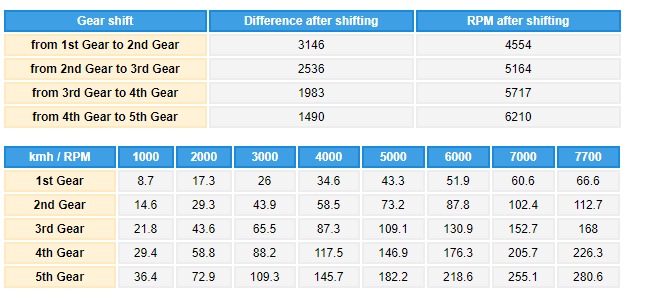
I’m running my car with Toyo semi slicks, and 50% limited slip differential with KW suspension. Otherwise the car is stock looking with full M-tech2 interior, and factory bodykit. The weight of the car is 1180kg (fuel tank 3/4 full), being identical to stock E30 325i. This is achievable by selecting the lightweight parts for the build, told on this blogsite. Actually you can reduce weight over 11,5kg from engine internals only! Its all about power-to-weight-ratio, power under the curve, and torque on rear wheels. By extending your engine’s usable power curve up to 7600rpm you can gain up to 160 hp on lower gear shifting point. This makes massive improvement on 0-60mph times.
By extending engine’s rev range the median power stays up while shifting. The result can be up to 160 extra hp from 1st to 2nd gear.
Stage 1: M60B40 with ported heads, headers, CAI and stock ECU
A budget swap on E30 is based on M60B40 engine, mostly due to its simplicity with both wiring harness and ECU. M60B40 is solid engine for a budget build. Just do head porting, increase compression ratio, add headers and Corvette style Cold Air Intake (CAI), and you’ll have 320hp and 450nm. Here’s Corvette-style CAI 101:
A) CAI gets air from the front, not hot air under the bonnet, and utilizes ram-air effect,
B) they are from C6 Corvette, and/or utilising the very same principle.
The other low cost option is to go with stock M62B44 engine, but they have milder cams than M60, and timing chain assembly is with single chain. M62B46, and M62B48, and S62 are also viable, but these options are expensive, and their availability is also scarce. Please remember, M62 engine family got bad timing chain and guide design, whereas M60 timing assembly with duplex chain is super solid, on par with S-engines.
Stage 2: Low budget M60B44 build with stock internals and ECU
So how about installing M60B44 engine? Hey, wait a minute! There is no official engine type such as M60B44 from the factory line. The aforementioned code simply refers to a custom built engine, utilizing the best components from both M60 and M62 engine generations. This unique combination creates a high compression engine, a ratio typically found only in S-series of engines. In the land of “what ifs”, this engine could have been rolled out from the factory as hypothetical, high power S-variant for M60 engine family. This homebrew engine modification is also know as M60B44 hybrid motor, or M60B44 frankenmotor.
First, let’s clarify one thing: If you are after a budget build, stick with a stock internals, and ECU. If you are after some serious naturally aspirated performance, you better have a good budget. Truth to be told, its far easier to get the same amount of power from a random V8 crate engine, than start tinkering with an exotic 32 valve bimmer engine. Ok, now when we are clear with this, we can proceed on how to build a serious high performance M60B44.
Stage 3: Hot street or race build with aftermarket parts and ECU
Builders are typically too focused on maximum hp numbers, and this in turn can lead to compromised low-to-mid end performance. Just a quick reminder: it’s power under the curve that matters. Be honest on what application you are building your engine for. If it’s on street, it’s for street. It really is that simple. This means your engine stays majority of its time on 1000-3000 rpm rev range. No matter your driving style.
Please check my other article about mean piston speeds, and volumetric efficiency here. Keep the mean piston speed below 21m/s, and you’ll have sufficient longevity for your build. For performance oriented build, and the extended power curve you’ll need hotter cams. With stock cams you can get very nice low-to-mid range torque, but not the extended power range. With right cams your effective shifting point can be on 7500rpm+ territory, while still having massive amounts of low-to-mid range punch and engine responsiveness. The best option is to go with hollow, gundrilled Cat Cams. Cat Cams can provide several options for M60 cylinder heads, including cams with customer specifications. For starters, Cat Cams sports are viable option if you still want to use stock ECU. Hot street or race cams with more aggressive overlap will provide you with extended power range, when combined with well built exhaust headers. More aggressive cams and lightweight components do require aftermarket ECU such as Motec M150 or similar in order to keep idle, and in case you want to utilize all 4 knock sensors.
Gundrilled, hollow Catcams in M60B44 hot street engine. These are 3,6kg lighter than stock cams.
Selecting right headers for your build
There is at least two aftermarket manufacturers building headers for M6x engines. You can also built them yourself, or let a workshop to do the magic. Please note, there is no need to go with bigger than 42 mm primaries on any configuration with less than 600hp. Optimal primary lengths are based on wave harmonics for desired operating range. Changes in your engine configuration will change the optimal primary length. Hot street build optimized for 4000-6500rpm range can be used either with long 730-790m primaries, 440-500mm mids, or 310-370mm shorties. Suitable collector size can vary from 2.25″ to 2.5″ depending on an intended use, and configuration. For street use my recommendation is 2.25″ collector. Optimal exhaust for M60B44 is dual 2.5″ with X-pipe, and free flowing mufflers. Optimal placement for X-pipe is about one meter from the end of primaries. Recommended, high quality manufacturer for custom spec exhausts is Martelius.
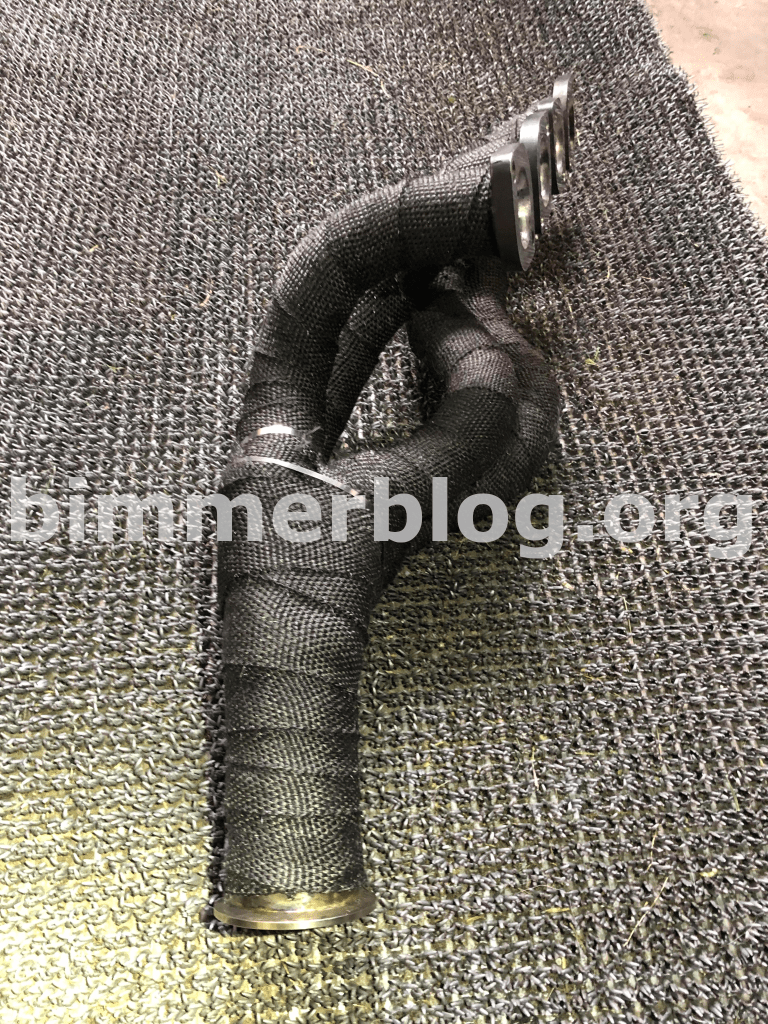
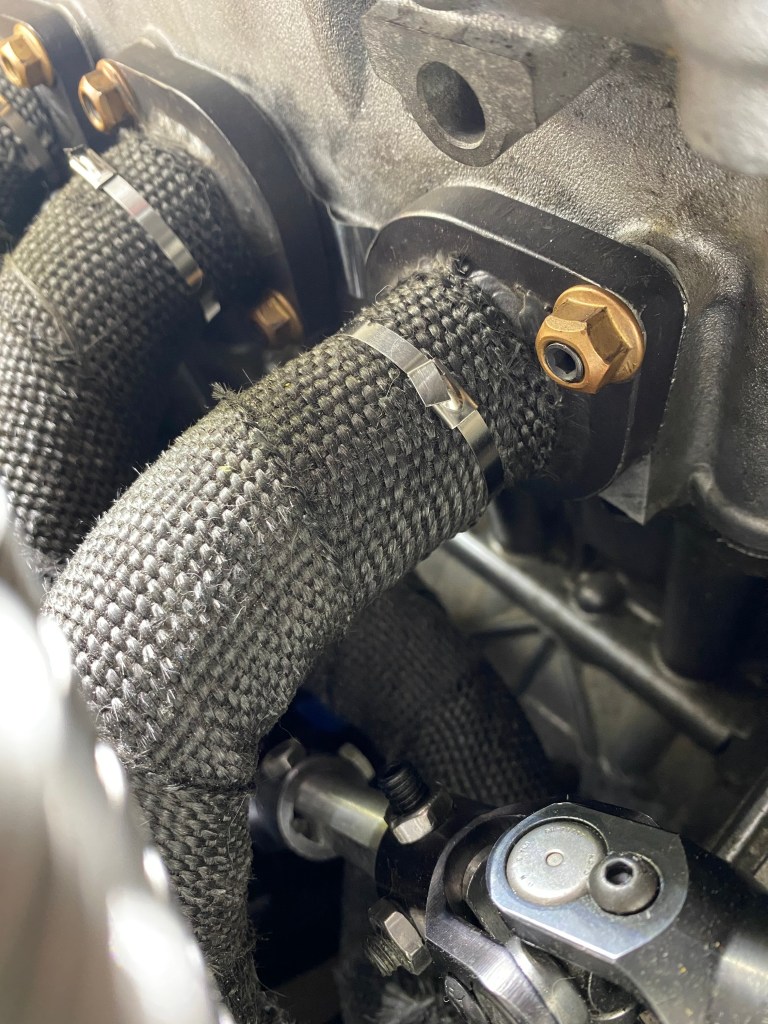
Mid length 41mm (1 5/8″) primaries with ported flanges. Note the follow-through for steering shaft.
Be advised with steering shafts
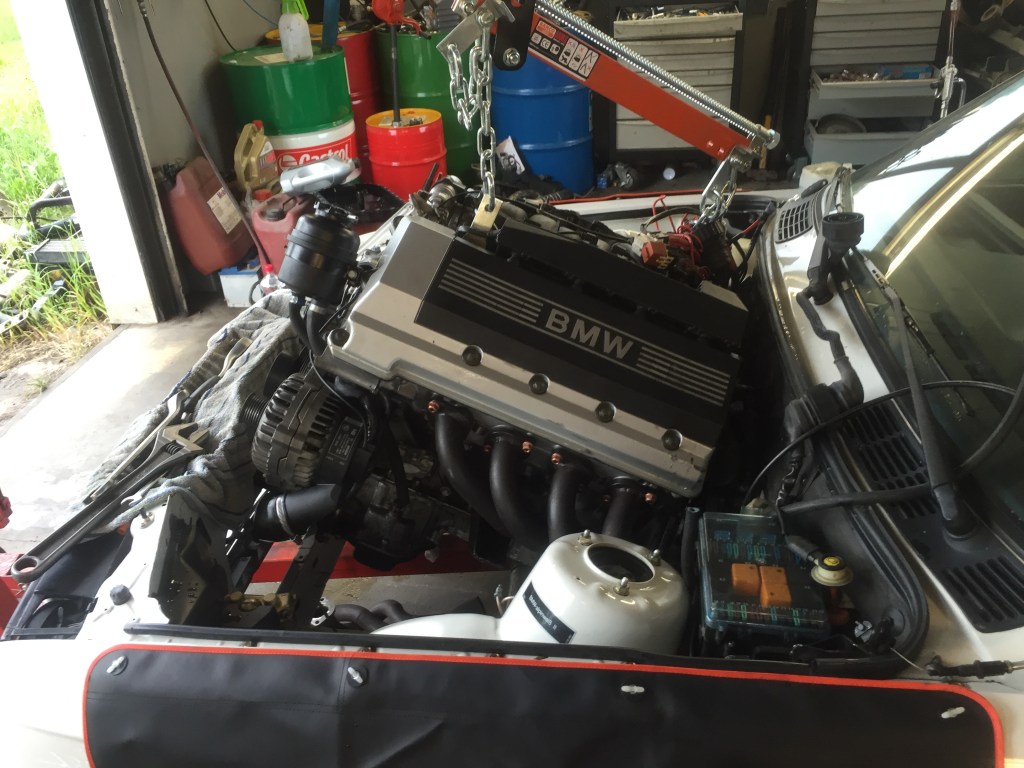
Exhaust headers for E30 V8 swap are tight fit thanks to bulky steering shaft. DO NOT weld, or shave off any material from any steering shaft configuration. Condor Speed Shop is providing bolt on steering shaft conversion kit for extra clearance. With stainless steel shaft you can get rid of the rubber coupler too (Rubber and heat = not good idea). The heat will destroy the stock rubber coupler, and likely will weaken other plastics as well – go with the full steel on this. The result is sharper steering response, and much safer build. I cannot emphasize this enough – Do not cut the corners on this.
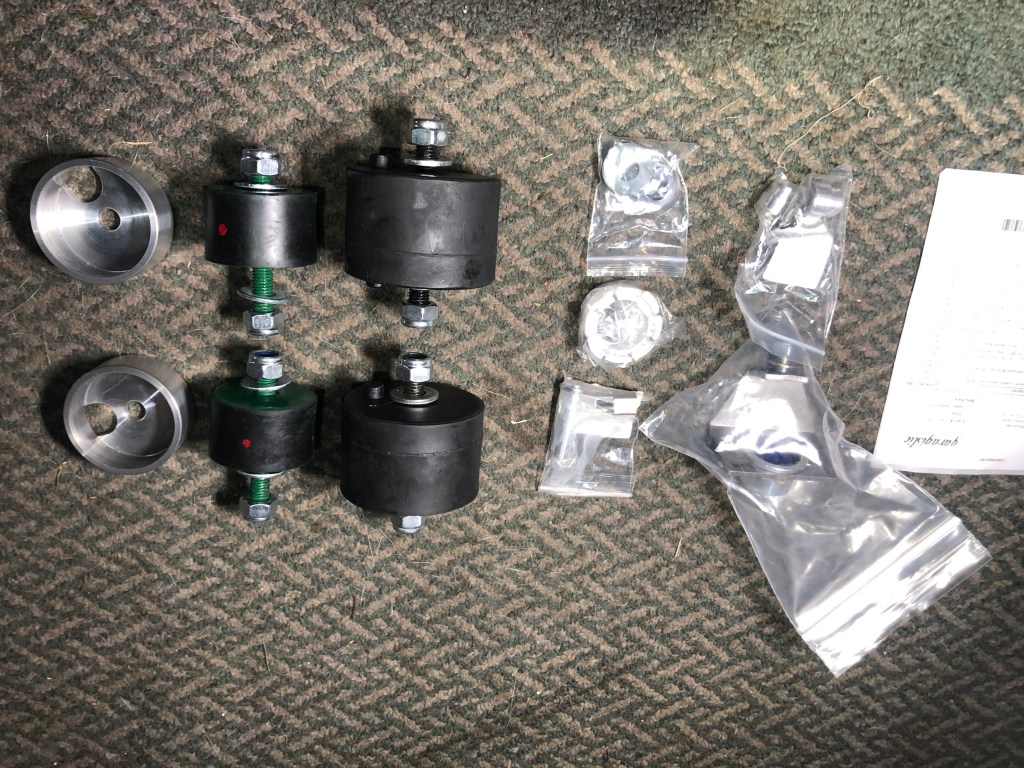
V8 engines are ruthless on first gear. 500nm of naturally aspirated torque on first gear translates to 6630nm of torque at rear wheel. (500nm x 4,21 tranny x 3,15 diff). No need to wait torque delivery on 3rd gear like turbocharged engines, instead you are full on from starting line. Combine this with 50% limited slip differential and semi slicks, and you can have some serious issues to keep engine, transmission, and rear differential at the bay. And I’m deadly serious about this. I broke universal light truck engine mounts with my first build. If you are looking for engine mounts, and what ever brackets please consult the dudes on Garagistics. The company provided me with correct bushings for transmission linkage, even I tumbled on describing the right combination. Likely one of the best customer service experiences I have ever had.
Transmission mounts with enforcer cups from Garagistics, and polyurethane shifter bushing kits for a tight feeling shifter. Please note there is both rounded and oval bushings for carriers.
About dual mount differential covers
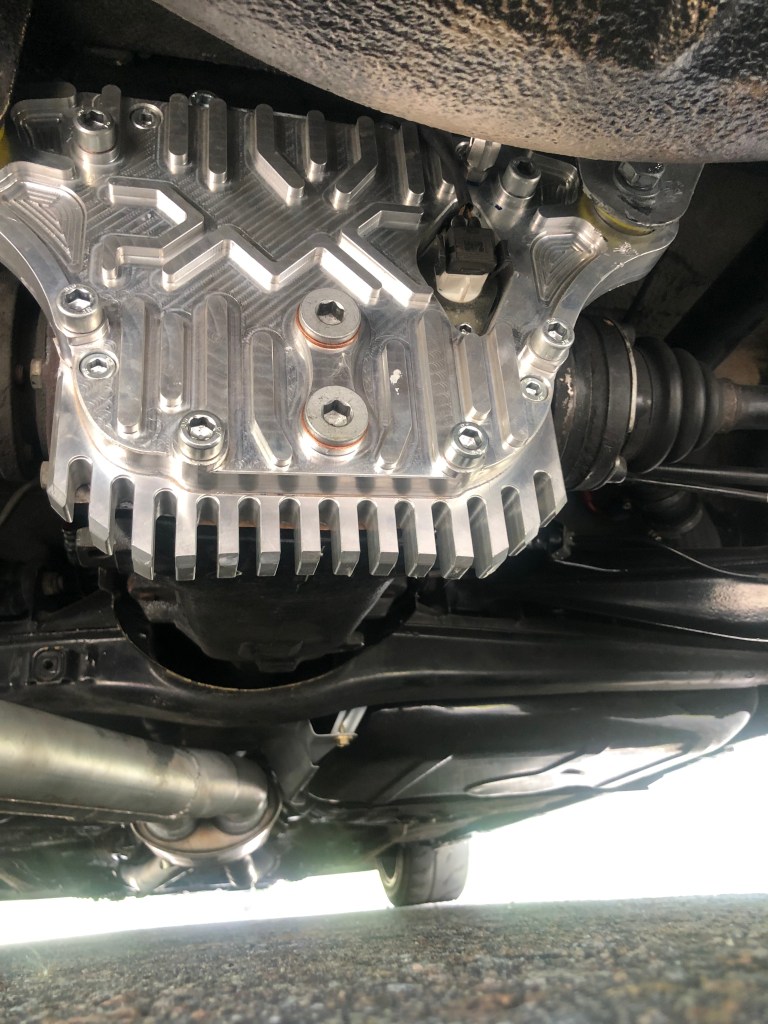
Stock diff covers on E30 are with single mount ear. Since driveline is under elevated stress its highly recommended to install heavy duty rear differential cover with dual mounts. There is several options out there, and while non of them I have seen are optimal (Tip me if you see any decent ones), its better to have a setup that can withstand the torque on first gear. You can either go with a stock E36 rear cover, or have one of the aftermarket ones.
Most aftermarket diff covers are not hemisphered, but nevertheless can offer more rigid assembly due to billet design. in the picture: PMC diff cover with improved breathing design.
Aim for serious gains with volumetric Efficiency (VE) of over 130%
The cylinder heads are CNC milled from the factory, and provided in 4-valve configuration with 35mm intake, and 30,5mm exhaust valves. Add this with professional porting services, and the cylinder heads can flow up to 300cfm @28″. This means theoretical hp of 600hp. Tick all the boxes mentioned on this blogsite, and your 4,4 litres V8 stage 3 configuration can charge air with Volumetric Efficiency (VE) of over 130%. That is state-of-the-art for an internal combustion engine.
Ported M60B40 cylinder heads with 35mm intake, and 30,5mm exhaust valves can flow closer to 300 cfm@28″
The base recipe for M60B44 consists of:
M62B44 bottom end,
M60B40 cylinder heads,
M60B40 robust timing assembly with duplex chain,
M60B40 wiring harness, sensors and ECU.
Benefits of building M60B44 engine:
Increased ~ 10,9:1 compression ratio,
By shaving 1mm from cylinder heads you can increase compression to ~ 12,2:1
Almost ideal stroke-to-bore ratio. In comparison, Ferrari 458 engine with 4,5 litres capacity has 94mm x 81mm (Bore x Stroke) whereas M62B44 engine is 92mm x 82,7mm,
4,6 litres and bigger M6x bottom ends increase stroke, which leads into increased piston speed, and compromised high rpm performance,
Wide selection of high quality M60 engine cams from Cat Cams,
Cylinder heads are CNC machined,
32 valve cylinder heads can flow 600hp,
Ported cylinder heads can provide excellent low lift flow,
Robust duplex timing chain that can take the beating,
Stiffer dual spring valve train. To gain real benefits from the M60 springs, you must assemble lighter lifters, see my other article here,
660-960 grams of weight saving with aforementioned lifters, allowing the top end to sustain revs up to 8400 rpm,
Durable Alusil block,
Lighter forged crankshaft, thanks to revised design with the central hollow cavity,
Oil spray nozzles for pistons,
Gaining the benefits of using M62B44’s MLS-type cylinder head gasket.
As you can see above, M60B44 combination gives you great prerequisites for building race, or hot street engine.
Building tips for M60B44 engine:
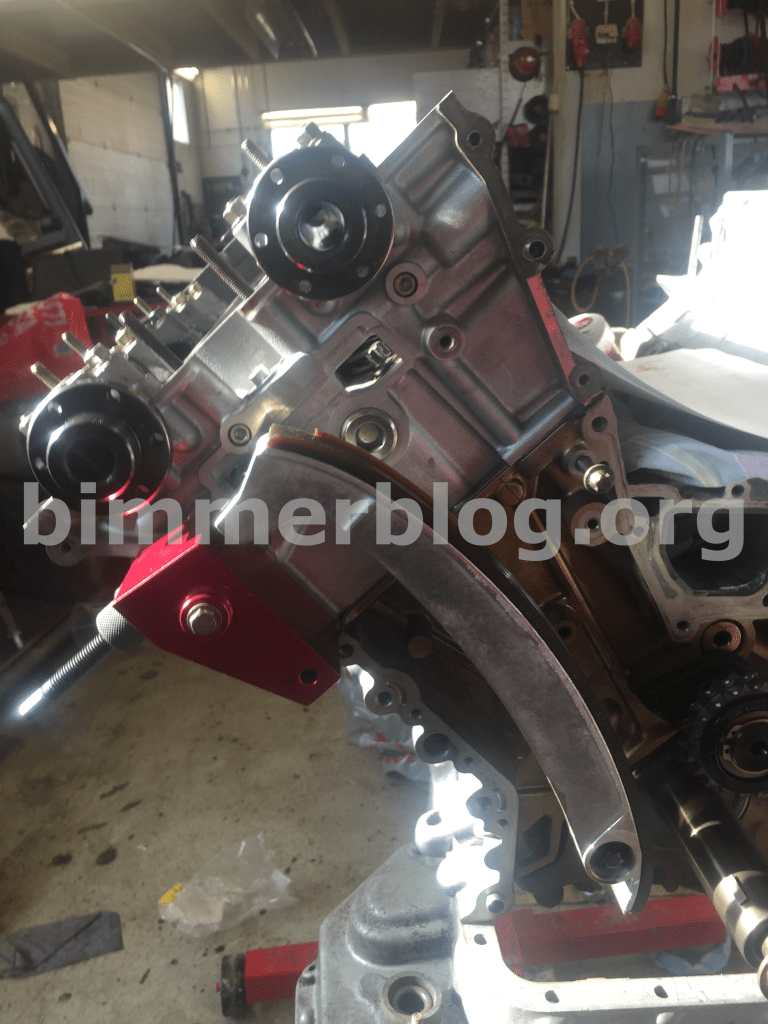
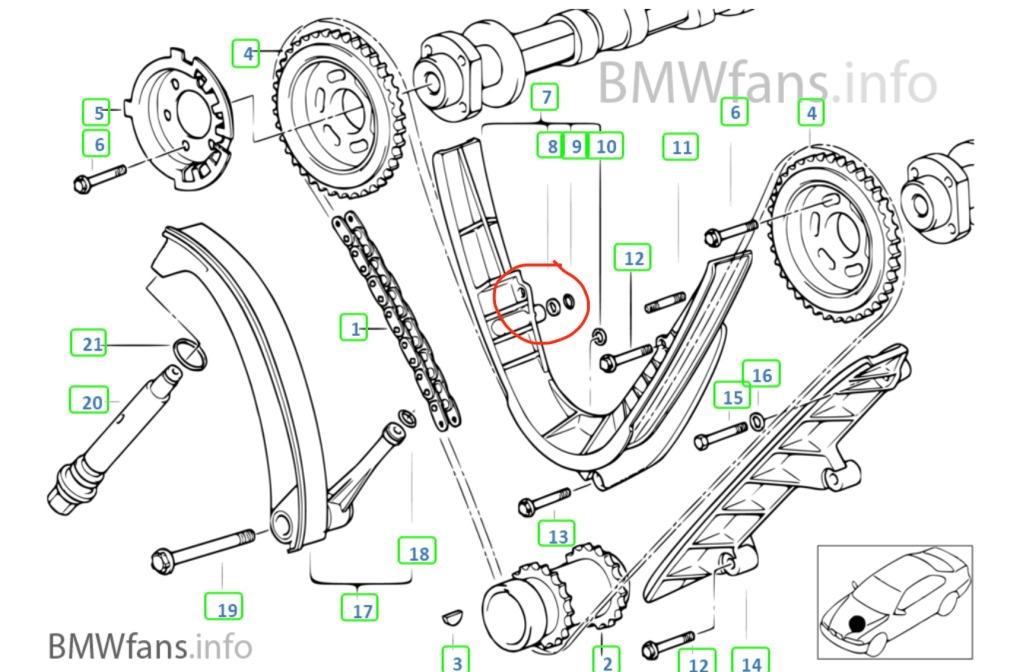
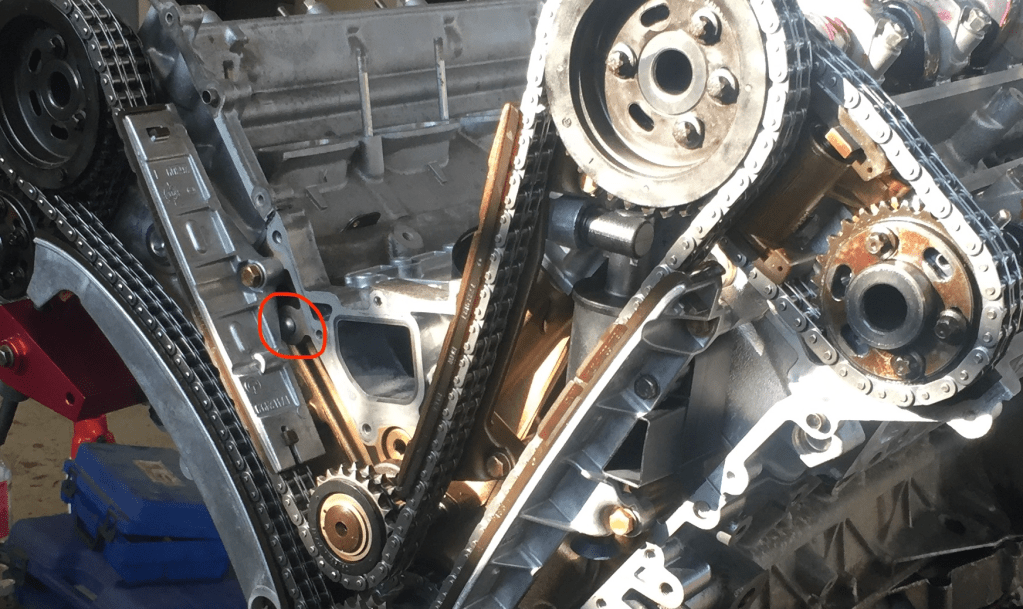
Remember to block the obsolete oil channel for M62 cam tensioner (See the pic below),
Stock ECU can handle sport cams with couple degrees of overlap (1mm-to-1mm). If you go with more aggressive cams such as 8 or more degrees of overlap (1mm-to-1mm) you’ll need an aftermarket ECU,
Reduced inertia can also cause your engine to stall on traffic lights, even with mid priced aftermarket ECUs,
With all above tips utilized, your engine is capable of producing amazing torque numbers, all the way up to 113-115 nm per litre.
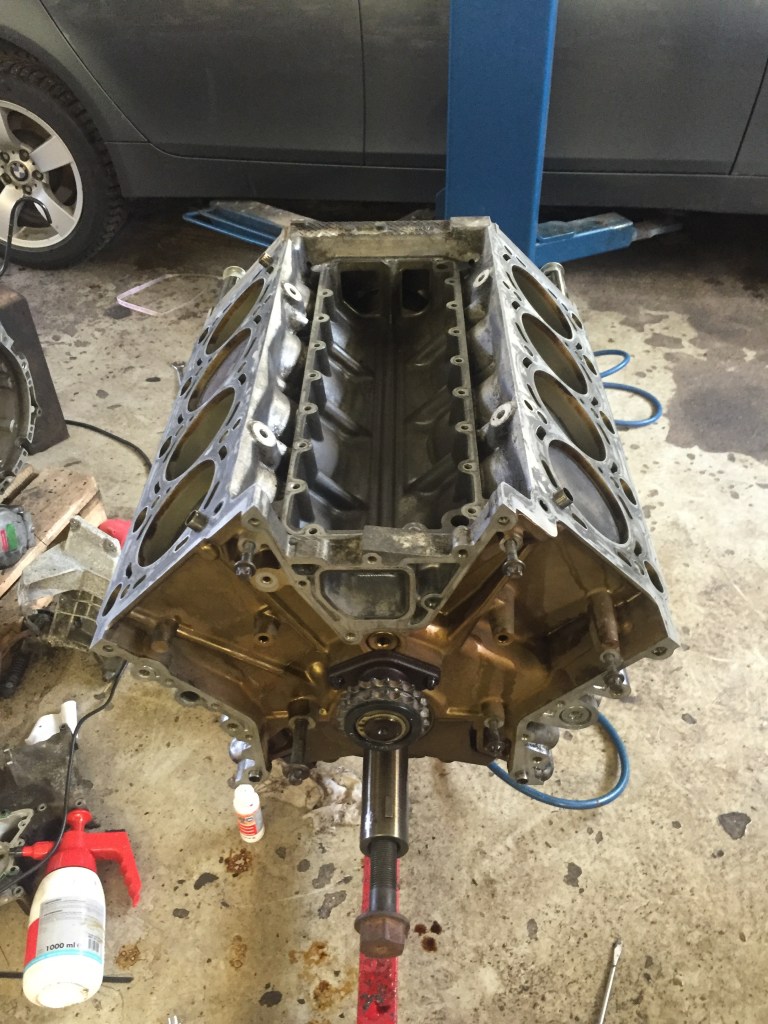
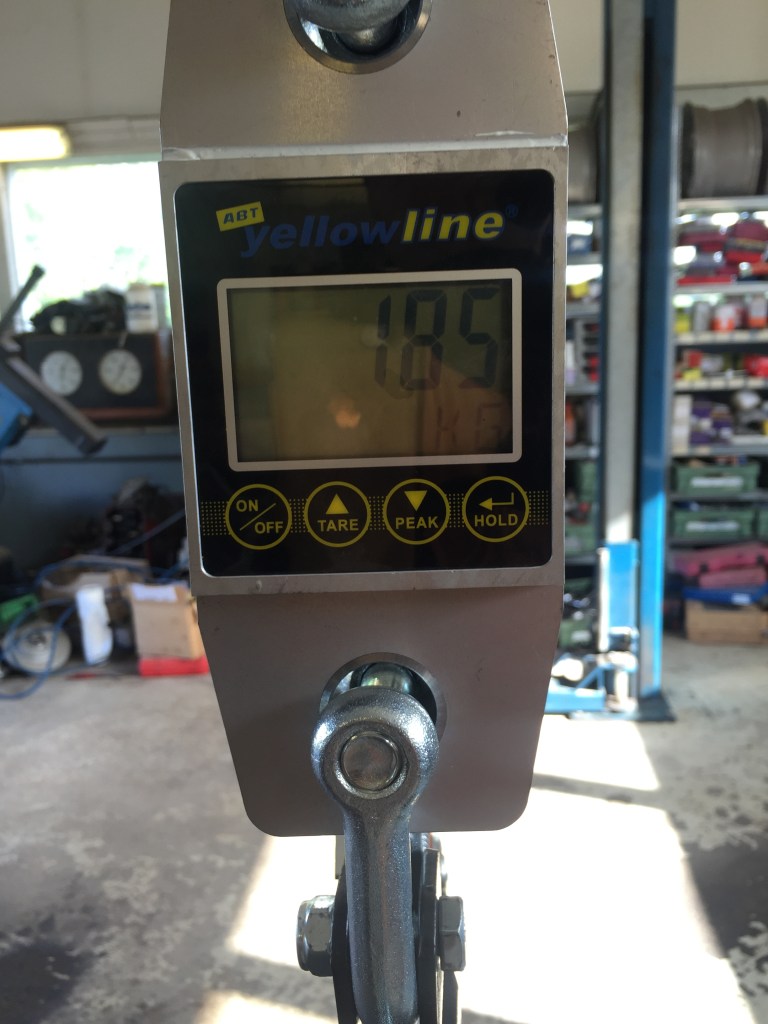
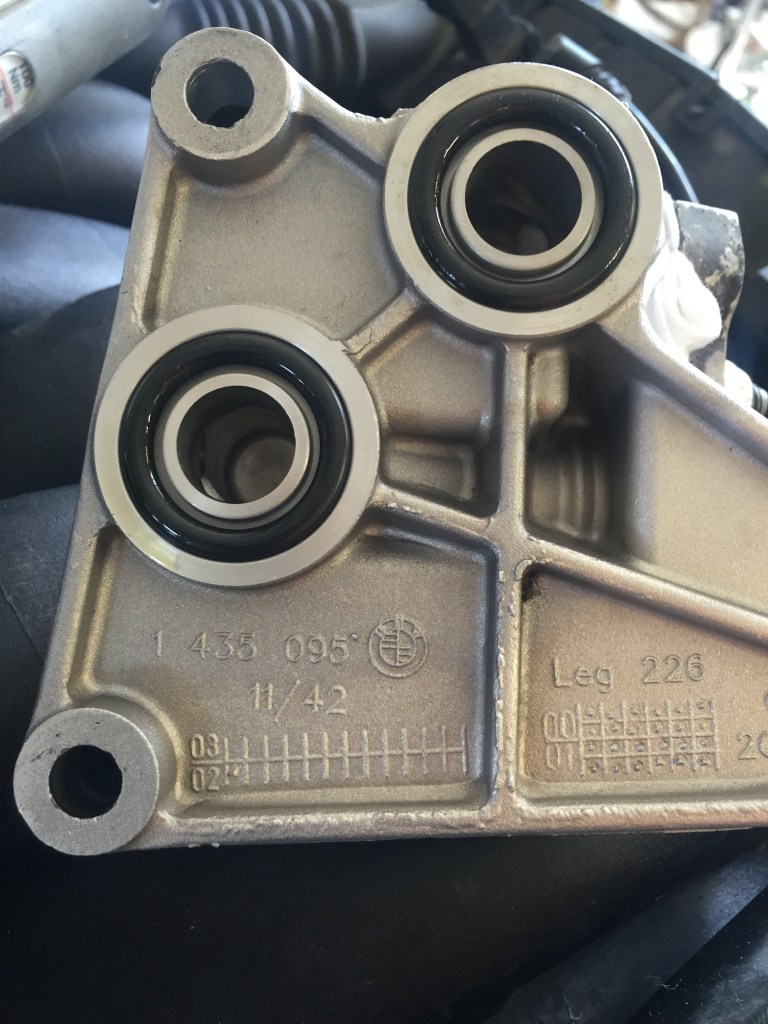
This is where it all begins, the building of custom M60B44 engine.M60B44 dry engine weight without starter motor and generator. Not that heavy!X5 oil assembly leg Nr. 1142 1 435 096 to use with E30 M6x swaps.
The obsolete M62 assembly with deflection rail (Nr. 7), and the location of the oil channel (Nr. 8 and 9).
M60B44 hybrid engine with robust duplex timing chain, and blocked oil channel.
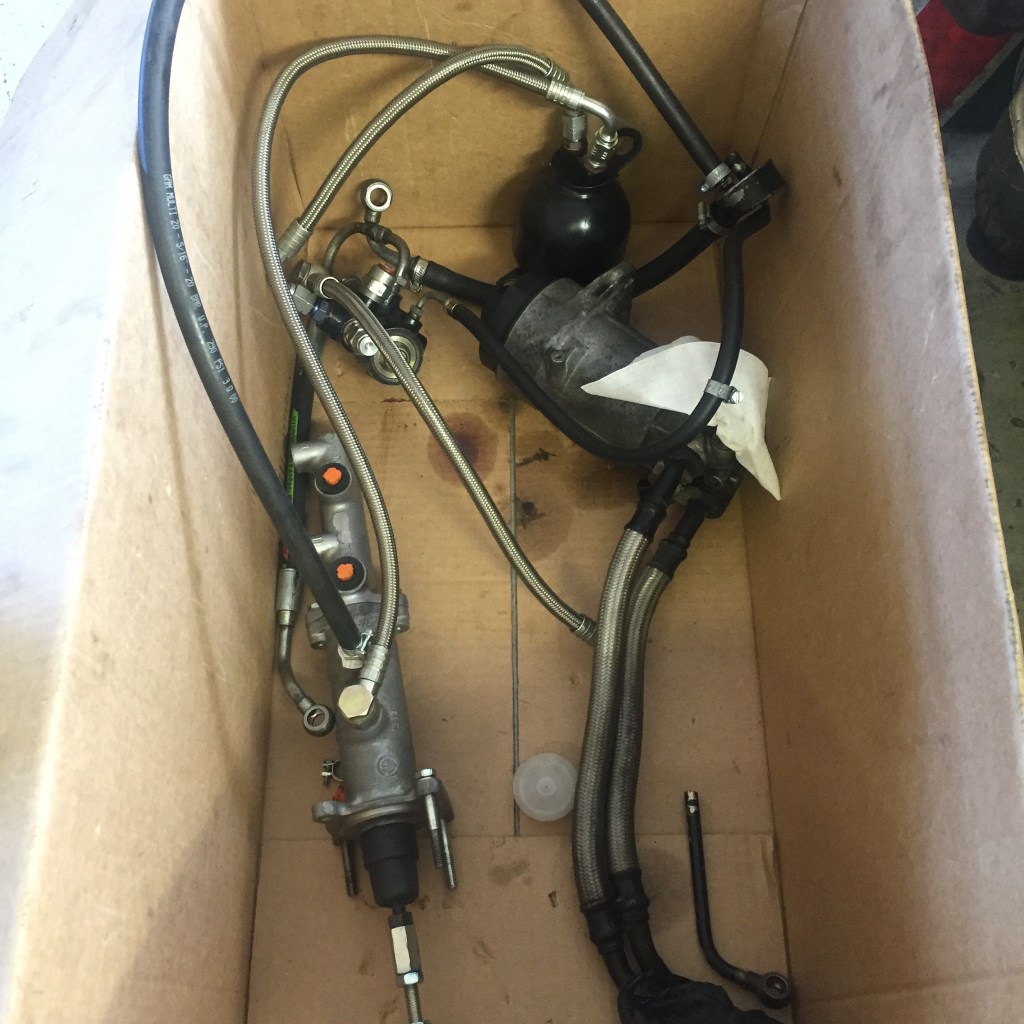
Hydraulic brake booster and brake master cylinder from BMW 850i (E31) for high quality brake assembly.M60B44 stage 3 engine is built to take some serious beating up to 8400 rpm!
More information about performance upgrades can be found on my other articles:


 BimmerBlog.org